
AI Visibility, Automation & AI, SEO
AI strategy consulting for associations: start with members and staff capacity, not tools
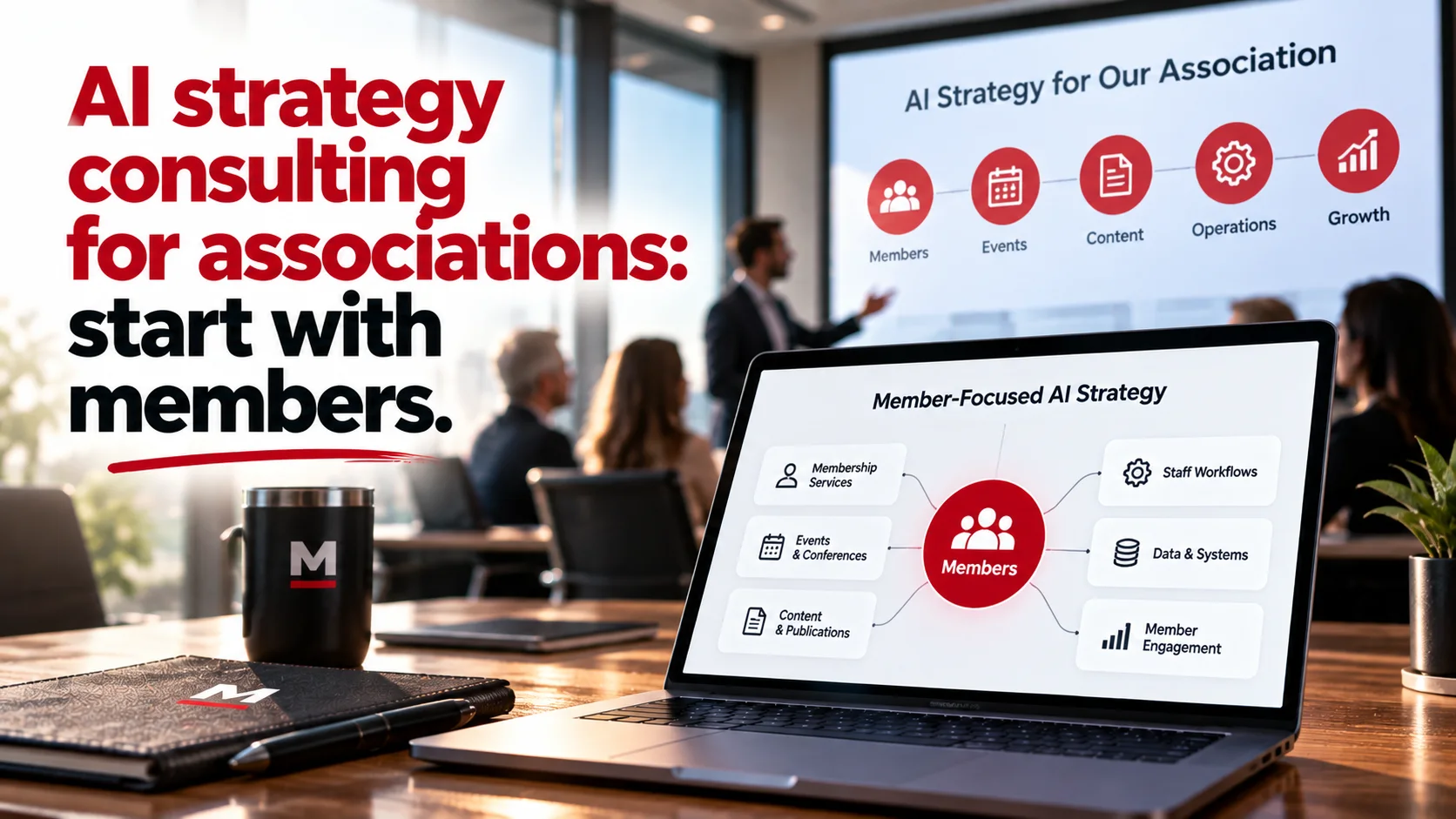
AI strategy consulting for associations should start with members and staff capacity, not tools
AI strategy consulting for associations turns pressure from boards and members into a short, prioritized plan: where AI can relieve a stretched staff, where it can raise member value and where it should stay out entirely. MediaCutlet works with associations on membership systems, events and content, so the strategy rests on how an association actually runs. The goal is a plan the board can approve and a small staff can carry out.
Most AI strategy consulting for associations starts from the same tension: members expect the association to lead on AI, while the staff is already stretched thin. ASAE’s own AI policy is a useful model, pairing encouragement to experiment with firm limits, such as keeping member and financial information out of unapproved tools. Associations need both halves, permission and guardrails, before anyone buys a tool.
MediaCutlet is five senior operators who embed with leadership teams, so the person shaping the strategy is the person who will build what it recommends. No account managers, no junior handoffs, no subcontracted outcomes. We measure the work in dollars rather than impressions on the results page: more than $500 million in client revenue traces back to web and AI projects we have delivered, including platforms that moved associations off manual dues and event processing.
MediaCutlet works out of Red Bank, New Jersey, with clients nationally, and Strato Doumanis leads the digital and AI practice. The firm’s client base includes statewide associations, trade unions and B2B media companies, which means association realities such as volunteer boards, dues cycles and annual meetings are built into the plan from the start.
Where does AI help an association first?
Usually in the work that eats staff time without adding member value: answering repeat member questions, tagging and searching years of publications, drafting renewal and event communications and pulling reports out of the membership database. Those uses are low risk, easy to measure and free staff for the work members actually notice.
How should an association handle member data and AI?
With a written policy before the first tool goes live. It should say which tools are approved, which data can go into them and which data never can, such as payment details and sensitive member records. Where member data needs to be part of the work, private AI setups that keep information on infrastructure the association controls remove much of the risk.
How do you get board buy-in for an AI strategy?
Tie every recommendation to the mission, member value or the budget, and start with a small, measured win instead of a sweeping program. Boards approve plans that show cost, expected return and risk in plain language. A pilot with numbers attached does more persuading than any presentation about the future of AI.
Should associations help members adopt AI, too?
Often, yes, because members look to their association to make sense of how AI is changing their field. Education, practical guidance and shared standards can become real member benefits. The association is far more credible offering that help once it has put AI to work in its own operations.
What an association AI strategy should produce
- a short list of priority uses ranked by member value and staff time saved
- a staff AI policy with approved tools and clear limits
- a data plan covering member, financial and event records
- a budget and timeline the board can approve
- measures that show whether each use is working
MediaCutlet builds association AI strategies that end in work, not a binder, and stays to implement the first priorities when the association wants a partner for the build.
Bring the AI question your board keeps asking. Contact MediaCutlet to turn it into a plan your staff can actually carry out.
Frequently asked questions
Is an AI strategy only for large associations?
No. Small-staff associations often benefit most, because every hour saved matters more. Their strategy is simply shorter and more focused.
Will AI replace association staff?
That is rarely the goal or the outcome. In most associations, AI takes on repetitive work so the same staff can spend more time with members, sponsors and volunteers.
How does AI affect association publications and content revenue?
It cuts both ways. AI search can reduce visits to published content, while an archive made searchable for members can become a stronger benefit. A strategy should address both sides.
Should we build an AI tool for our members?
Only if members would clearly use it and the association can support it over time. Internal uses usually come first, because they prove value at lower risk.
How long does it take to develop an association AI strategy?
A focused strategy typically takes a few weeks, including staff interviews, a review of systems and data and a prioritized plan ready for board review.
Can AI help with our annual conference?
Yes. Registration support, session recommendations, sponsor reporting and post-event follow-up are all practical uses, and they connect directly to event revenue.
An association AI strategy is judged by what members notice and staff stop dreading, not by the slide deck.
About the Author: Griffin Whitmer

Keep Reading


